Digital Fee Collection in Schools: A Complete Guide
Super Admin
Author
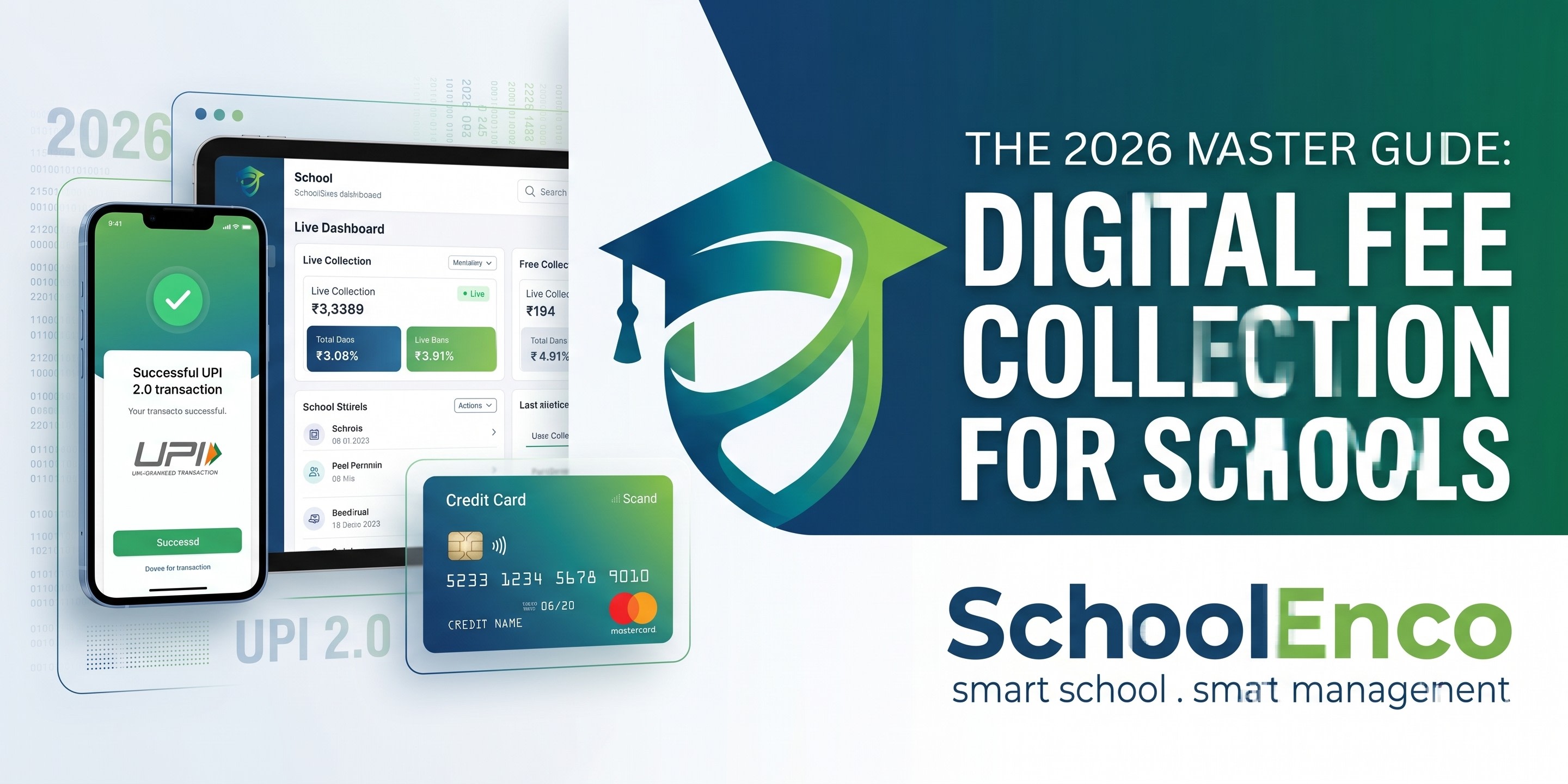
The 2026 Master Guide to Digital Fee Collection
An exhaustive roadmap for school administrators to achieve 100% financial automation and transparency.
In the rapidly evolving educational landscape of 2026, the financial pulse of an institution is no longer measured by the thickness of a ledger, but by the efficiency of its digital bits. As the Digital India initiative reaches its peak, the "Fee Counter Queue" has shifted from a physical hallway to a smartphone screen. For school owners and principals, this shift represents the single most significant opportunity to improve cash flow and administrative sanity.
1. The High Cost of "Manual" Management
Traditional fee collection isn't just slow; it's expensive. When you calculate the man-hours spent on printing receipts, manual data entry, banking trips, and reconciling bank statements against student IDs, the "hidden cost" of manual collection can exceed ₹50,000 to ₹1,00,000 per month for a mid-sized school.
- The Leakage Factor: Unrecorded late fees and manual entry errors.
- The Security Risk: Handling large amounts of physical cash on campus.
- The Parent Friction: Forcing working parents to visit the school during office hours.
2. Architecture of a Digital Fee Ecosystem
A true digital fee system isn't just a "payment gateway." It is a three-layered architecture designed to ensure that no rupee goes missing.
A. The Payment Layer (Multi-Channel)
By 2026, UPI 2.0 has revolutionized how parents pay. Your system must support:
- Dynamic UPI QR Codes: Unique codes for every student that automatically identify the sender.
- Standing Instructions (Autopay): Allowing parents to authorize monthly recurring fee deductions.
- Net Banking & Cards: For high-value transactions like annual admission fees.
B. The Communication Layer (The "Nudge" Engine)
The biggest hurdle in fee collection is forgetfulness, not unwillingness. Using the WhatsApp Business API, schools can now send "Actionable Notifications." These aren't just texts; they include a "Pay Now" button that opens the parent's preferred UPI app with the exact amount pre-filled.
3. Solving the "Reconciliation Nightmare"
One of the primary reasons schools hesitate to go digital is the fear of "matching" 2,000 online payments to 2,000 students. This is where SchoolEnco’s Smart Reconciliation engine changes the game.
The Old Way
Checking bank statements, searching for "Parent Name" (which often doesn't match the student name), and manually updating Excel sheets.
The SchoolEnco Way
Virtual Accounts/Unique IDs ensure that when a payment hits the bank, the student’s ledger is updated instantly without human intervention.
4. Case Study: Transitioning to 100% Digital
Consider a school with 1,200 students. Before automation, their "Fee Week" required 4 dedicated staff members. After implementing the SchoolEnco Fee Module, they reduced the staff requirement to 0.5 (one person checking reports for 2 hours a day).
The result? A 22% increase in early-bird fee payments and a complete elimination of "I lost my receipt" disputes from parents.
Ready to Transform Your School’s Finance?
Stop chasing payments and start growing your institution. SchoolEnco provides the most robust, UPI-integrated fee management system in India.
Book a Free Demo Today5. Frequently Asked Questions (FAQ)
A: Absolutely. By using encrypted gateways and direct bank settlements, schools eliminate the risk of physical theft or internal embezzlement.
A: While 90% of urban and semi-urban parents now use smartphones, a hybrid system allows you to record manual cash entries into the same digital ledger for unified reporting.
This guide is part of our series on Modern School Administration. Stay tuned for our next post on how UPI is specifically changing the landscape of Indian education.
Ready to automate your school?
Join 100+ schools using our school ERP software plans to collect 100% fees and automate attendance.
Tags
Have a topic suggestion?
Let us know what you'd like to read next.